
The 14-Ton Secret: How the VGM vs. MGM Trap Destroys Your Financial Model
The reality of physical commodity trading, maritime constraints, and the friction that eats your P&L.

Spreadsheets love clean, predictable margins. The reality on the loading dock is entirely different. The real money in physical commodities is not made in perfect financial models; it is made in the friction, the complex logistics, and the hard physical execution.
A desk analyst looks at a trade flow and sees a math equation. A physical operator looks at the exact same flow and sees gravity, thermodynamics, and carrier yield management.
Here is the operational breakdown of why spreadsheets fail, and how operators actually price the physical friction of global trade.
1. The Operator’s P&L: Ownership vs. Brokering
Let's clear the baseline. A broker simply connects a buyer and a seller for a commission. There is no edge there. A physical commodity trader takes ownership of the goods and assumes all the risks financial, logistical, and legal to move the product from Point A to Point B. Managing and absorbing this risk is what justifies the profit margin.
In this arena, Profit & Loss (P&L) is always calculated per metric ton, never per container.
Take a standard physical flow: exporting premium raw dates from Algeria to Malaysia. You are selling CIF (Cost, Insurance, and Freight). To build your true break-even, a spreadsheet simply takes the raw material cost, adds a standard ocean freight quote to Port Klang, and slaps on a flat insurance premium.
But a real operator knows you have to absorb inland haulage to the Algerian port, local origin terminal charges, strict documentation fees (Phytosanitary, Certificate of Origin), and the cost of capital. If you pay your local supplier early but your Malaysian buyer pays on Day 60 when the ship arrives, your cash is tied up. That opportunity cost hits your P&L directly before you even calculate net profit. Executing this math reliably at scale is the definition of the operator’s edge.
2. The Illusion of the Box: Weight vs. Volume
There is a massive blind spot regarding container sizes and limits. You cannot put 40 tons in a 40-foot container. “40” refers to its length in feet, not its payload capacity.
Both standard 20ft and 40ft containers share roughly the same structural Maximum Gross Mass limit (around 30,480 kg). But the physics dictate a paradox: a smaller 20ft box can physically carry more weight than a 40ft box.
A 20ft container’s empty weight (Tare) is only ~2.2 tons, leaving a max payload of ~28.2 tons.
A 40ft container’s Tare is ~4 tons, leaving a max payload of ~26.4 tons.
But the steel box is a trap. Even if the container can hold 28 tons, the truck carrying it to the port cannot. And here is where geography dictates the rules: Gross Vehicle Weight Ratings (GVWR) are strictly bound by domestic road regulations, and every country plays by a different rulebook.
When you add the truck cabin, the chassis, and the empty container Tare, you accumulate massive “dead weight.” How much actual cargo you can legally put inside depends entirely on where that truck is driving:
The EU Standard: Intermodal limits hover around 40 to 44 MT gross. Subtract the dead weight, and your legal cargo payload is strictly capped between 22 and 24 MT.
The US Bottleneck: The Federal highway limit is a strict 80,000 lbs (36.2 MT) gross. Because American trucks and chassis are notoriously heavy, your legal payload hits a brick wall at 19 to 21 MT. Try to move 24 MT, and you are forced to buy specialized tri-axle chassis and overweight permits, instantly bleeding your margin.
The “Flexible” Markets: In parts of Africa, the Middle East, or less strictly regulated Asian countries, enforcement bends. Trucks routinely run at 50+ tons gross. Here, you might actually get away with stuffing 27 MT into the box assuming the truck’s axles don’t snap before reaching the port terminal.
If your global spreadsheet assumed a flat 28 MT payload everywhere, your margin just evaporated on the asphalt of a US highway or a European toll booth.
3. The Carrier’s Trap: TEUs and the Trade Lane
Shipping lines penalize dense cargo. Ships manage their stability and yield based on a maximum buoyancy weight. If every operator loaded 24-ton containers, the vessel would hit its maximum draft limit while still half-empty, incinerating the carrier’s revenue on unsold slots.
This is where pricing is weaponized, and why the trade lane matters.
Not all oceans weigh the same. If you are shipping short-sea across the Mediterranean, a carrier might absorb a heavy box. But routing that same box to South-East Asia is a deep-sea trade lane crossing major transshipment hubs. On these long-haul routes, vessels are fiercely deadweight-constrained.
If you push past 14 tons in a 20-foot container (1 TEU) on an Asian routing, carriers aggressively trigger an Overweight Surcharge (OWS). You are penalized for cramming massive weight into a single TEU footprint.
But the punishment doesn’t stop at surcharges. This is where port congestion enters the equation. A spreadsheet assumes First-In, First-Out. An operator knows that when a major hub like Singapore or Port Klang is bottlenecked, the carrier’s loadmaster must ruthlessly optimize a delayed vessel. A 24-ton 20-foot box is a structural liability because heavy containers are the hardest to balance. During peak congestion, your overweight box is the first to get “rolled” left on the yard for the next ship. Your theoretical 30-day transit just became 45 days, freezing your cash flow and bleeding your margin through terminal storage fees.
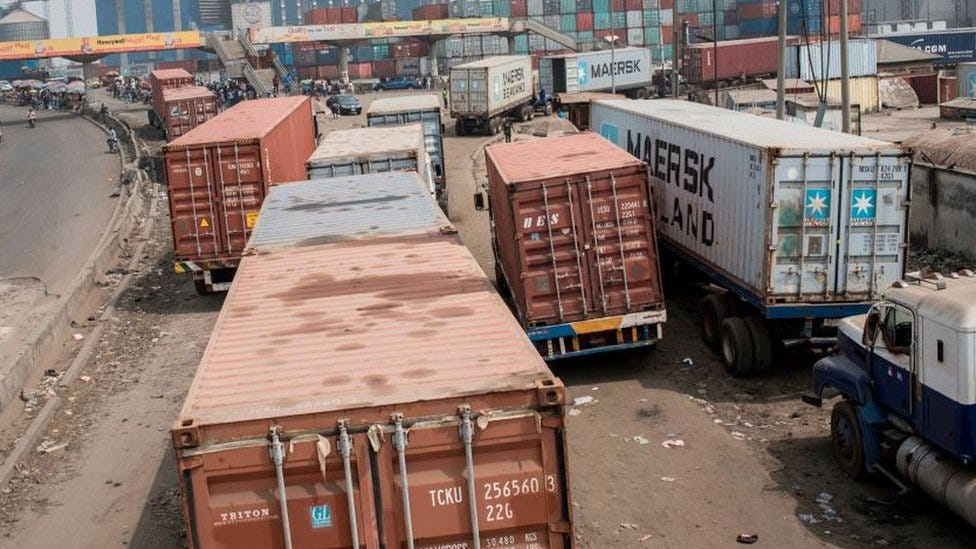
Because a 40ft container spreads its weight across 2 TEUs, the ship remains balanced, OWS rarely applies, and the box is much less likely to be rolled.
This exposes another classic spreadsheet illusion: assuming a 40-foot container costs twice as much as a 20-foot container. It doesn’t. In reality, a 40ft is usually only 1.3x to 1.7x the price of a 20ft, and sometimes the rates are nearly identical. Why? Because physical friction is calculated per unit, not per foot. The port crane makes one lift. The terminal charges one gate fee. The trucker drives one chassis. The administrative desk issues one Bill of Lading. The effort is the same.
A desk analyst sees that 1.5x price ratio and instantly models the trade using a 40ft to dilute the per-kilo freight cost. But if your cargo is incredibly dense and you hit the 22 MT truck weight limit while the 40ft box is still half empty, you didn’t optimize anything. You just paid a 50% premium to ship expensive air across the ocean.
4. Executing Premium Cargo: The Thermodynamic Equation
When moving premium, temperature-controlled physical goods, theoretical volume becomes entirely irrelevant. Thermodynamics and product integrity dictate the operation.
Let’s go back to our flow: exporting premium raw dates to Malaysia.
A desk analyst looks at a 20-foot refrigerated container (20RF) and calculates their freight cost per kilo based on maxing out the box at 24 MT. A physical operator knows that floor space, crush strength, and airflow will destroy that model.
Why is the true operational limit the Master Gross Mass (MGM) of the cargo exactly 14 MT ? It is not a random estimate; it is a strict physical equation: Floor Space × Crush Strength × Airflow.
A 20-foot Reefer limits your floor space to 10 standard pallets. You cannot floor-load premium dates; they need to breathe. So, you build vertically. But you immediately hit two hard ceilings:
Gravity: If you stack the cartons too high to hit 24 MT, the bottom layers crush under the pressure. Your premium brand turns into paste before it leaves the Mediterranean.
Thermodynamics: You must leave a mandatory gap at the roof the red load line for the cold air to cycle from the refrigeration unit. If you block the airflow, the temperature spikes, and your cargo rots.
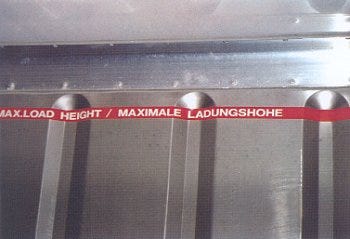
When you maximize the safe number of tiers per pallet to respect both the structural integrity of the dates and the mandatory cooling gap, the math stops dead at 14 MT.
If you priced your CIF contract assuming a standard freight rate spread across 24 MT, but reality forces you to ship only 14 MT while getting hit by a lane-specific overweight surcharge... your margin evaporates. You didn’t optimize the trade; you just subsidized the shipping line’s yield management.
The Bottom Line
Cross-border execution requires navigating a brutal gauntlet: securing banking compliance at origin, ensuring transshipment hubs maintain your cold chain, and clearing strict local safety authorities at destination.
The spreadsheet doesn’t know the weight of your cargo. Planners try to predict the stress; operators price the friction. When theoretical models fail, physical execution is the only edge left.